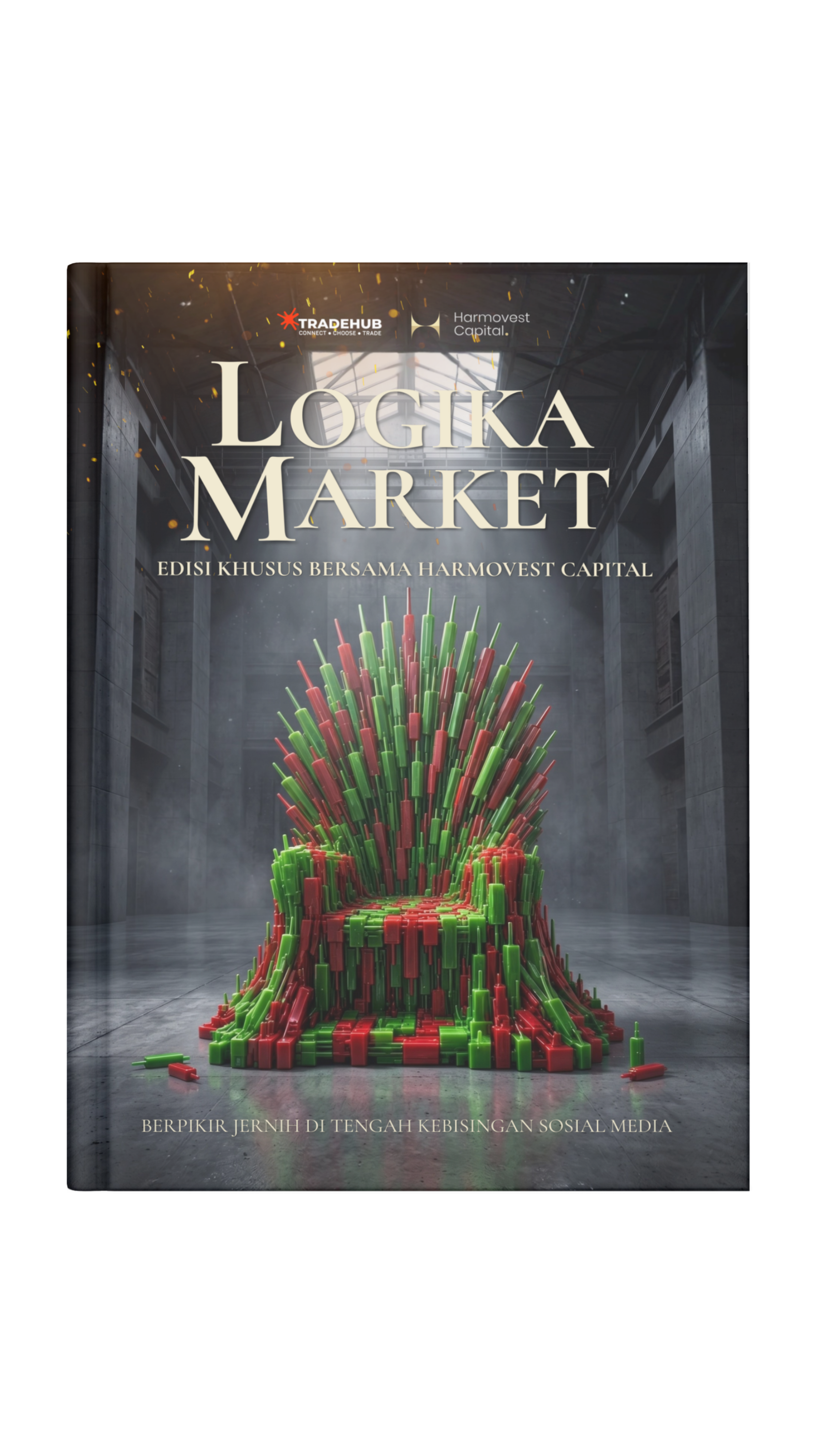
Free e-book, 7 chapters.


Good analysis and disciplined habits, yet the balance still slips slowly? This free e-book dissects one thing rarely discussed: where your trading costs actually go, with real figures from a Plus-USD account at Harmovest Capital.
- Contents
- 7 chapters
- Format
- PDF, sent by email
- Price
- Free
- Verification
- WhatsApp number (OTP)
- Written by
- A team with 15+ years as an IB
- Client funds
- None, it is an e-book
TradeHub operates as a multi-broker Introducing Broker, and this e-book is upfront about it. We receive commission from brokers on your trading volume. We do not manage or hold client funds. The material is educational and not financial advice. Past trading results do not guarantee future results.
If the signals are that good, why are they given away?
A question rarely asked, and an answer rarely given.
Trading content on social media is built to grab attention: profit screenshots, a flood of testimonials, and "join before slots run out". All of it triggers one thing, a sense of urgency.
What is rarely discussed: whenever you trade through someone's referral link, part of the cost from your account flows to the owner of that link. That is how the Introducing Broker system works, and TradeHub is part of it. The difference is that we pay part of it back to you and explain it openly.
A trader who understands the cost structure has a real edge. Not from a better signal, but from a smaller leak.
Where does your money go per trade?
A simulation from Harmovest Capital, Plus-USD account, XAU/USD, 1 lot.
Four things left untold
Rarely touched by mainstream trading content, yet big for long-term results.
- Trading echo chamber
- Once you pause on one profit post, the algorithm serves more of the same until it feels like everyone is winning. That is a bubble made by scrolling habits, not market reality.
- Hidden transaction costs
- Costs already paid before profit is counted. Chapter 3 dissects exactly where the money goes, with a simulation.
- The illusion of signal accuracy
- No signal is consistently right. Understanding probability and expectancy is worth more than a 90% win-rate claim that cannot be independently verified.
- The maths of losses
- A 50% loss needs a 100% gain to recover. Trading content almost always covers how to enter a position, and almost never this simple arithmetic.
Seven chapters you can apply right away
Ordered progressively, from grasping the context to concrete steps you can take today.
1. Trading content on social media: inspiration or trap?
Once you pause on one profit post, the algorithm serves more of the same until the feed seems to agree that everyone is winning. That is an echo chamber. This chapter also dissects survivorship bias: you only see those who succeeded, while those who failed went quiet long ago.
2. Why free signals are never really free
A signal provider does not need you to profit. They only need you to keep trading. This is the principal-agent problem. The chapter also covers fiduciary duty, the obligation that binds licensed financial advisers but almost never binds social-media signal providers.
3. The anatomy of trading costs: spread, commission, and where your money goes
This chapter dissects the Market Maker model, which can conflict directly with your profit, and ECN/STP, whose cost comes purely from spread and commission. It also covers swap and slippage, rarely discussed openly. The figures come from a Plus-USD account at Harmovest Capital.
4. Rebates and cashback: cost refunds for the efficient trader
Two traders with the same strategy and lot count can carry different net costs, depending on where they registered. This chapter explains how a rebate lowers costs (it does not guarantee profit) and how to check whether your account is linked to an Introducing Broker.
5. Building a shield: real risk management
A 20% loss needs a 25% gain to recover. A 40% loss needs 67%. A 50% loss needs 100%. This chapter also covers revenge trading, the urge to open a bigger position after a stop loss to recover fast, which is rooted in loss aversion.
6. Three concrete steps toward trading independence
Three steps you can start today without starting from zero: audit the "introducing broker" field in your account dashboard, activate the rebate that is yours by right, then build a decision system that keeps running on days you are not motivated.
7. Closing: start trading with a cool head
If you thought "that is me", it is nothing to be embarrassed about. Almost every trader has been there. What separates traders who grow is whether they stop to understand how the ecosystem they play in works.
Meet the broker behind the figures
The examples in this e-book use a Plus-USD account at Harmovest Capital.
Harmovest Capital is one of TradeHub's partner brokers. According to its broker page, leverage is dynamic up to 1:2000, it is supervised by five regulators, and the rebate is paid the same day. Broker statements have not been independently verified by us.
Get the e-book, free
Presented by TradeHub, an Introducing Broker platform that explains how it works openly.
- 7 chapters of a logic-based guide to independent trading, written by a team with 15+ years of experience as an Introducing Broker.
- The spread and commission cost structure, and how the rebate system works, explained openly.
- A simulation from published rates: how much cost goes out and how much can come back through a rebate.
- A quality PDF, sent to your email after WhatsApp verification.
 +62
Your data is never shared with any third party.
Start with the e-book, continue as you need
After reading, compare brokers and see how much a rebate can cut your costs.
Through TradeHub, at no cost
- Automatic rebate
- Exclusive promos
- Direct help
- Switch IB
- Community
Risk warning. Trading leveraged financial instruments involves significant risk to your capital. All material in the e-book is educational and not investment advice. Past trading results do not guarantee future results.