Five levels
- Foundations: why traders lose before they start
- Costs: where your money goes
- Market: reading direction from structure
- Risk: the maths of losses
- System: from knowing to consistent
Free, written, and with no premium class waiting at the end. From how trading costs work to choosing a route: brokers, crypto, or prop firms. We do not teach guessing price direction.
- Levels
- 5, written
- Price
- Free
- Reading
- ± 10 minutes in total
- Covers
- Forex & CFD, crypto, prop firm
- Video
- Coming soon
- Progress
- Saved on your device
TradeHub operates as a multi-broker Introducing Broker. We do not manage or hold client funds; all funds sit with the broker or exchange where your account is opened. This material is educational, not financial advice or a guarantee of results. Trading Forex, CFDs, and crypto carries a high level of risk and you can lose all of your capital.
Trade Academy is free, so the material never ends in an upsell.
Most of TradeHub's income comes from rebates on trading volume at partner brokers. Trade Academy itself is free, with nothing to pay upfront.
- Free
No premium class
No paid mentor or VIP class inserted partway through this material.
- 5 levels
In order, but free to read
From foundations to building a system. Jump to any level at any time.
- 3 routes
Forex & CFD, crypto, prop firms
The material applies to all three, and each level points to the service that fits.
- No account
Progress on your device
Tick the levels you finish and progress is saved automatically.
A map of three routes
The material below applies to all three. Here is a quick picture before you read.
| Route | How it works | Whose capital | Main cost | At TradeHub |
|---|---|---|---|---|
| Forex & CFD | Trading price differences on MetaTrader through a broker | Your capital | Spread, commission, swap | 6 live brokers |
| Crypto Exchange | Spot and futures on a crypto exchange | Your capital | Maker and taker fees | Bitget live, Binance and OKX coming soon |
| Prop Firms | A firm-funded account after passing an evaluation | The firm's capital, you pay an evaluation fee | Evaluation fee | Coming soon |
0 of 5 levels marked done
Level 1: Foundations
Why most traders lose before they start. ± 2 min read
Before strategy, get to know the terrain. Most beginners lose not because their analysis is wrong, but because they enter the market on emotion: FOMO when price runs, panic at a small loss, and trust in free signals from accounts that never show their losing history.
- Market hours
- Forex trades around the clock, but activity is uneven. The London session (about 14:00 to 23:00 WIB) and New York (about 19:00 to 04:00 WIB) are busiest, and the hours shift by one hour in winter. Outside those, spreads often widen and price is harder to read. The crypto market is different: it trades 24 hours a day, all week.
- Pip value
- On USD-quoted pairs such as EUR/USD, 1 pip is usually worth 10 USD per 1 standard lot.
- Leverage
- Leverage of 1:500 means 100 USD of capital can control a 50,000 USD position. The same force can multiply gains, and can wipe out capital within minutes.
- Free signals
- A signal-group admin does not carry your capital. If the signal is wrong, the loss is entirely yours, while they still collect attention from their next post.
Want to go deeper? Trading foundations: why most traders lose before they start
Read the full articleIn practice
- Pick one route from the map above to study first. Compare the options on Forex & CFD or Crypto Exchange.
- Want a quick primer before moving on? Read the free e-book Market Logic.
- TrendBite will scan thousands of assets automatically (NexusOS, in development). Not usable yet.
Level 2: Cost anatomy
Where your money actually goes. ± 2 min read
Every time you open a position, part of your money flows to the broker or exchange. That is true through TradeHub too. The difference is that we explain the mechanism openly, rather than hiding it behind "low spread" or "no commission".
- Forex and CFDs
- The costs are spread, commission, and swap (overnight interest when a position is held past the day). Some brokers also charge an inactivity fee. A "no commission" ad sometimes means the spread was widened.
- Crypto
- Spot and futures use maker and taker fees, calculated on trade value. Futures contracts can also carry a funding cost while the position is open. At Bitget, spot fees at VIP 0 are 0.1% maker and 0.1% taker.
- Prop firm
- The main cost is the evaluation fee, plus a retake fee if you fail. Ask for every fee before you pay.
- Introducing Brokers and rebates
- An IB like TradeHub receives commission from the broker on client volume. We pay part of that commission back to you as a rebate, and the rest is our income. A rebate is paid win or lose, and does not guarantee profit.
- A-book and B-book
- An A-book broker passes orders to the market and earns from spread or commission. A B-book broker takes the other side of client trades, so its interests can run against yours. Check a broker's execution model before opening an account.
Want to go deeper? The anatomy of trading costs: where your money actually goes
Read the full articleIn practice
- Get the basics first on the What is a rebate.
- Compare each broker's real costs on Forex & CFD, and exchange costs on Crypto Exchange.
- Spreads usually widen around big news. Live Trade is on air right at those moments.
- ImpactRadar will flag no-trade zones around news releases (NexusOS, in development). Not usable yet.
Level 3: Reading the market
Reading the market from structure, not feeling. ± 2 min read
Once you understand costs, learn to read the market itself: from price structure and confirmation you can explain, not from feeling or from following red and green candles.
- Trend structure
- An uptrend shows consistent higher highs and higher lows. Once the pattern breaks, that is an early sign of a possible reversal. Reading structure first lowers the risk of buying into euphoria.
- Momentum and pullbacks
- A healthy trend is usually backed by rising volume, while a temporary pullback shows shrinking volume. In forex, the volume available is usually tick volume rather than exchange volume, so treat it as a hint, not proof.
- Correlation between assets
- XAU/USD (gold) and the dollar index DXY generally move in opposite directions. In crypto, many smaller assets tend to follow Bitcoin. Correlation helps test an analysis, it does not replace one.
- Retail sentiment
- When most retail traders lean hard to one side, some analysts use it as a contrarian indicator. It is not a rule, so do not use it alone.
- Economic news
- Data releases such as NFP and CPI can move price sharply within seconds. Plan your position before the release, not once price has already run.
Want to go deeper? Reading market direction from price structure, not from feeling
Read the full articleIn practice
- Follow Live Trade to see big news releases discussed live.
- MarketLens will filter market noise, CrowdPulse reads the positions of most retail traders, and TradeMind tests your idea before you execute (NexusOS, in development). Not usable yet.
- Questions about reading the market? Ask in the Connect Hub.
Level 4: Risk management
The loss maths that rarely gets taught. ± 2 min read
A 20% loss needs a 25% gain to recover. A 50% loss needs 100%. A 90% loss needs 900%. That is not a small detail, it is why risk management matters more than any entry strategy.
- A plan before the position
- Decide first how much of your capital you can lose today, before opening a chart. A plan written before emotion arrives is always more rational than a decision made in the middle of a floating loss.
- The 1 to 2% rule
- Risk at most 1 to 2% of capital per trade. Lot size is worked backward from the stop-loss distance, not placing a lot first and seeing how much is lost.
- Risk-reward of at least 1:2
- If you risk 10 USD, aim for at least 20 USD. With this ratio you can be wrong more often than right and still come out ahead.
- Liquidation
- On CFDs and crypto futures, a position is force-closed when margin runs short. According to the Bitget page, CFD liquidation happens at a 50% margin ratio and commission is not counted when margin is checked. Leave room.
- Prop firm loss limits
- At a prop firm, the daily and total loss limits are conditions of passing. Breaking one means the evaluation fails. The risk rules you would set yourself become mandatory here.
| Loss | Gain needed to get back to even |
|---|---|
| 20% | 25% |
| 50% | 100% |
| 90% | 900% |
Want to go deeper? Risk management: the maths of losses and position size
Read the full articleIn practice
- LotGuard will size your lot from a risk percentage, and ZenMode will freeze execution access after a losing streak (NexusOS, in development). Not usable yet.
- Read how loss limits work on the Prop Firms (coming soon).
- Learn the risks of futures and leverage on the Crypto Exchange.
Level 5: Building a system
From knowing to being consistent. ± 2 min read
The last level turns everything you have learned into habits you can review, and helps you spot when you need a system to help, rather than just promising to be disciplined.
- A journal beats an indicator
- An indicator gives a generic signal for everyone. A journal shows the pattern of mistakes specific to you, for example always entering too early after a winning streak.
- Review by pattern
- One win or loss means nothing. Only across dozens of trades can you see whether your strategy works or you just got lucky.
- Know your limits
- If you understand the theory but struggle to stay disciplined executing by hand, that is not failure, it is data. At that point a system starts to make sense as a tool, not a shortcut.
- Choose your next route
- Once your journal points a way, continue in Forex & CFD, try crypto through Bitget, or measure your discipline through a prop firm (coming soon).
A system does not replace understanding. It is a tool once you grasp the basics, not a shortcut before you do.
Want to go deeper? Building a trading system: from a journal to choosing a route
Read the full articleIn practice
- PipPrint will log and review each trade automatically (NexusOS, in development). Not usable yet, so start with a manual journal.
- Not ready to execute by hand? See how CopyTrade Studio works, with a high-water-mark split of 70% for you and 30% for TradeHub. The risk remains.
- Trade notes with other traders in the Connect Hub.
Past Level 5? Pick your route and register through TradeHub so the rebate is recorded from your first trade.
After the five levels
What you can do with what you have learned.
- Forex & CFDLiveCompare 6 live brokers and get a rebate on your trading costs.
- Crypto ExchangeLiveStart with Bitget, with a daily rebate. Binance and OKX follow.
- Prop FirmsComing soonTest your discipline with a firm's capital. The firm list follows.
- CopyTrade StudioLiveCopy trades automatically into your own broker account.
- Connect HubFreeTradeHub's six official channels for swapping notes and news.
- NexusOSIn development, 2026Eight analytical instruments mapped to each level. Not yet released.
How we teach
Concise, tied to real services, and honest about what does not exist yet.
- Concise
- Each level is about 2 minutes of reading (estimated from its word count), enough to understand without dragging on.
- Tied to real services
- Each idea points to the relevant TradeHub page. NexusOS tools are labelled "in development" until they can be used.
- Trackable
- Tick the levels you finish. Progress is saved in your browser, no account needed.
- Video to follow
- Video versions of each level are in production and will complement, not replace, the reading.
Frequently asked questions
Short answers about Trade Academy.
Is Trade Academy really free?
Yes. Trade Academy, the five levels and their in-depth articles, is free with no hidden upsell inside it. TradeHub's main income comes from rebates on trading volume at partner brokers.
Do I have to use a TradeHub broker?
No. Anyone can learn. But if you want to practise the rebate or CopyTrade ideas covered here, it fits best to use a TradeHub partner broker or exchange.
Does the material cover crypto and prop firms?
Yes. Each level covers the costs, risks, and steps that matter for Forex & CFD, crypto, and prop firms.
Does finishing the five levels guarantee profit?
No. The Academy builds understanding and discipline, not guaranteed results. Trading still risks your capital, however well you understand it.
Can I use the NexusOS tools mentioned in each level?
Not yet. NexusOS is still in development, with a projected 2026 release. Each level mentions it as a preview of a tool, not something you can open today.
How is my progress saved?
The "Mark this level as done" ticks are saved in your browser, and sync automatically if you log into your TradeHub account.
When do the video versions arrive?
There is no date yet. The videos are in production and will appear on each level to complement the reading.
Start at Level 1, not with a signal.
All five levels are readable now, whenever you are ready. Video versions follow as a complement, not a replacement for the reading.

- Levels
- 5, written
- Price
- Free
- Video
- Coming soon
- Progress
- On your device
Through TradeHub, at no cost
- Automatic rebate
- Exclusive promos
- Direct help
- Switch IB
- Community
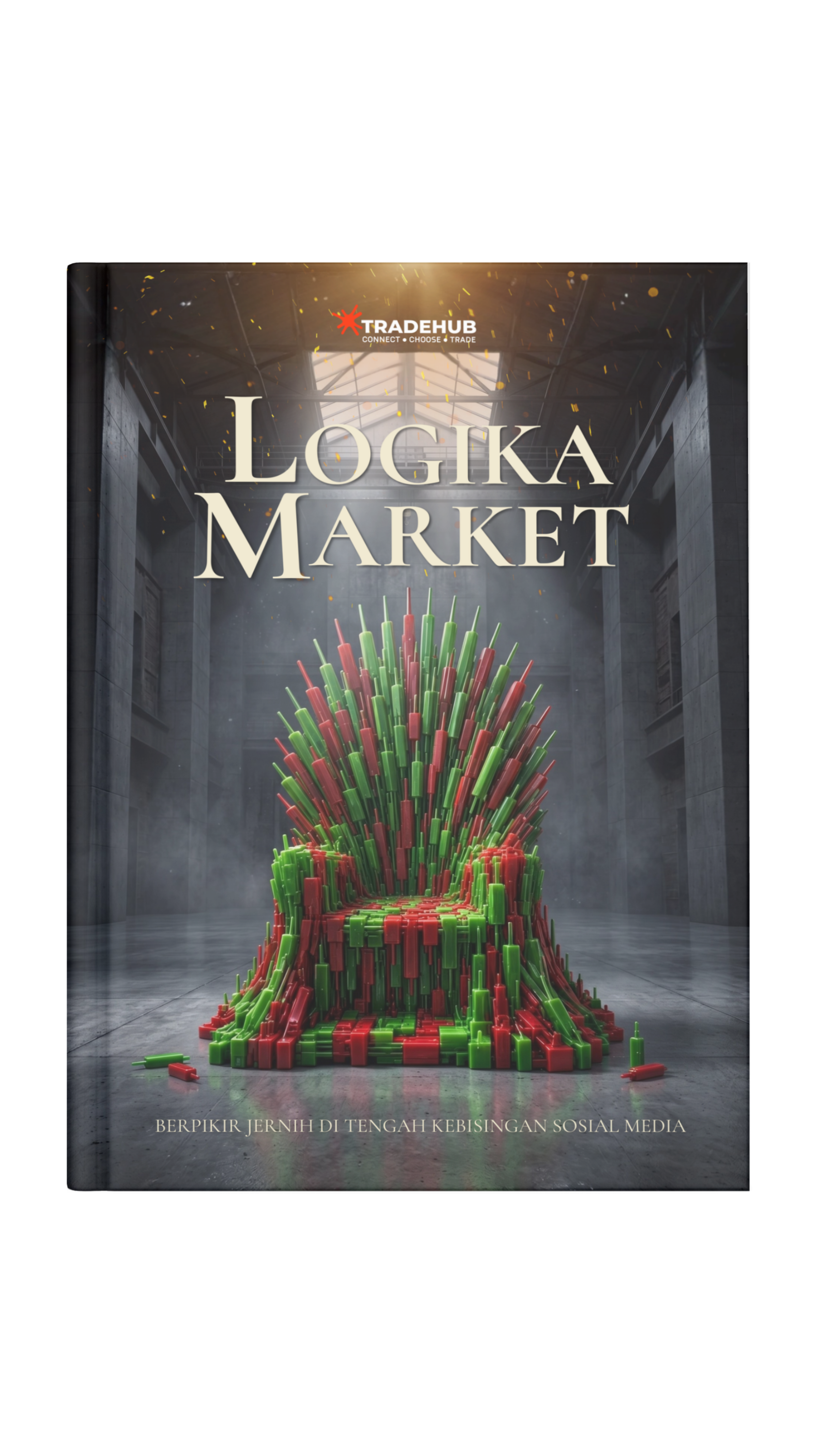
A guide to thinking clearly about rebates, broker fees, and how to choose the right broker.
Download freeRisk warning. Trade Academy material is educational, not financial advice or a guarantee of results. Trading Forex, CFDs, and crypto carries a high level of risk, including the possibility of losing all of your capital.